|
Vietnamese businesses must know how to
“play” with China
VietNamNet Bridge – Vietnam and China are
both WTO members, they are neighbors, they have developing economies and they
have the need of trade exchange. There is no reason for Vietnamese businesses
to keep away from this market while Chinese businesses enter narrow alleys in
Vietnam.
That is the wise direction that is supported by many people.
However, first of all, Vietnamese businesses should
firstly look on their own to adjust themselves and to have appropriate
policies.
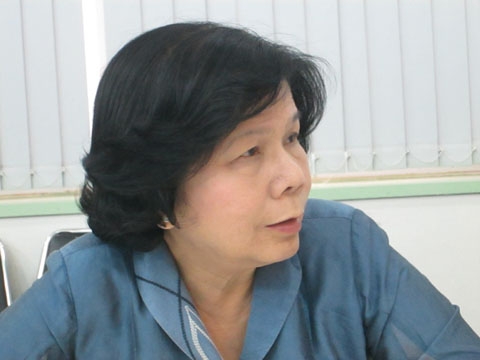
Dr. Vu
Kim Hanh.
The weaknesses and mistakes of
Vietnamese businesses
Dr. Nguyen Thi Dung, Vice Chair
of the Foreign Economics Faculty of the University of Foreign
Trade, an expert of the Japan International
Cooperation Agency (JAICA): We were supposed to have trade agreements with
them for a long time. So far, the legal basis for trade relations between the
two countries have not fully developed due to production goes faster than the
demand of switching mechanisms and policies, resulted in problems in
policies.
Meanwhile, China has taken advantage of our
weakness and their forte. The border trade policy has been entirely
detrimental to Vietnamese goods to China,
but incredibly convenient for Chinese enterprises to sell unqualified and
smuggled goods into Vietnam.
Ms. Vu Kim Hanh, Chair of
the Association of High Quality Businesses, Director of the Business Research
and Enterprise Support
Center: We do business with China in the
form of border trade exchange because the scale of our businesses is too
small. China
has preferred this form of trade because they use this policy to rehearse, to
improve their economic strength in their border provinces.
Border trade is holding the knife blade. The good is
that any goods can be sold, at any time. Many contracts were committed
orally. When goods were transported to the border, they did not open the
border gate. A lot of Vietnamese traders got heavy losses. This way of trade
is very easy but it is very risky.
In this game, we accept to hold the knife blade and
give them the handle. The knife cut our fingers many times but we still
accept it.
I really do not understand our market control agency.
There are a lot of problems about the management of the country, public order
management, market management and economic policy. Chinese traders have cause
many serious cases but why do not we manage them?
Consultant Moc Que, Deputy
Director of the Micarcen Research and Consultancy
Center: Doing business with China is not
only doing business but cooperating for mutually benefit; thereby creating
dialogue, not confrontation. That’s why they call the knowledge economy. Many
countries around the world are unsatisfied with China but still have to organize
the economic front very thoughtful, seriously. Because the buyers, i.e.
"God", or Chinese people and entrepreneurs are the friends of the
people of Vietnam.
We have not done research to see how the Chinese
businessmen work in Vietnam.
They usually make three business tricks as follows: Grasping supermarkets,
wholesale markets, i.e. the output of Vietnam; carrying out
cross-border trade, not through contracts to find ways to buy cheap; and
stimulating greed. They advised Vietnamese firms to not open companies in China so that
we are not active in information. As a result, our businesses know nothing
about the Chinese market.
Ignoring the golden opportunity...
Dr. Nguyen Thi Dung:
Politically, the European countries and the United
States have always criticized China but in fact many European and American
leaders often "visit" the China with big business
delegations. It is necessary wisdom.
Vietnam also has
many advantages in doing business with China. The two countries share a
border, that helps shorten the distance and transportation costs. Vietnam and China have similar cultures so
they are very easy to understand each other, easy for negotiation and
transactions. The policies of Vietnam
and China
have disagreement but they are not force majeure as some other countries. It
is also convenient for trade between the two countries.
China is an
extremely attractive market, which accepts any kind of goods, with lower
taxes. The policy of China
is open for foreign goods. We and they are all WTO members, who share the
same "playground", why do not we "play?"
It seems that many businesses of Vietnam are
not concerned and do not exploit these advantages. The above advantages are
the basis for us to cooperate with China
to make products with high competitiveness that China
or Vietnam
alone cannot make. For example, the U.S. has Coca Cola as a
world-wide product. If Vietnam
and China
together research and take advantage of the potential availability of raw
materials, science and technology to produce a unique product, even more
amazing than Coca-Cola is so good?
If we link with China wisely we can master our
market and get rid of the tragedy of losing in our home.
Dr. Moc Que: We have to
get to know all reasons to overcome our weaknesses and develop our existing
advantages and at the same time learn from the Chinese to quickly build our
strategy to enter China.
It is illogical and unwise to "forget" our strategic location and
turn this advantage into the golden opportunity.
Chinese consumers are similar to Vietnamese consumers.
This is a great advantage for market research and marketing.
Many ASEAN countries that are away from China but they are successful in selling goods
to China while Vietnam still
do in the guerrilla style, which is outdated and inefficient.
Border trade between Vietnam and China is the trade
between Vietnamese residents with Chinese people living in communes along the
border, with every transaction valuing up to VND2 million ($100)/person/day
in accordance with the laws of Vietnam.
Border trade is often characterized as (but not
necessarily) the payment in cash and no purchase agreement. It is noted that
this form of trade is not smuggling because it still requires permission and
taxed. Goods transported across the border are still subject to inspection by
customs, quarantine, border, immigration authorities, etc..
Border trade is said to have low stability. Because the
value of every transaction is small, in many cases commodities are fruits.
This makes the trade turnover can vary seasonally, depending on the weather,
the change of quarantine policy. This form of trade is thought to be
vulnerable to tax avoidance. Because the tax rate is usually lower than the
official trade, the procedures is also more simply so businesses can hire
people in the border area to make purchases to not have to pay more tax.
Duy Chien
|
Không có nhận xét nào:
Đăng nhận xét