|
BUSINESS IN BRIEF 8/11
Housing market slows but expected to
pick up
Though the real estate market is said to be in a rather
strong growth phase, it is still showing signs of slowing down and some
unstable aspects, which could badly affect it if they are not addressed in
time.
This judgment is based on the decrease in the number of
successful transactions in the country’s two biggest markets, Hanoi and HCM
City.
In September, for instance, the number of transactions was
respectively 1,100 and 1,050, down from 1,200 and 1,160 in August.
One severe limitation in the market is an oversupply of
high- and medium-end apartments and a shortage of products that most people
can afford.
Some analysts attributed the market slowdown to certain
changes in policies by the State Bank of Vietnam (SBV), especially its hike
in the risk index for lending for property and securities from 150 per cent
to 200 percent.
It also lays out a roadmap for reducing the cap on medium-
and long-term lending using short-term funds from 60 per cent to 40
percent.
The 30 trillion VND housing stimulus package launched in
June 2013, which offered loans at a maximum interest rate of 5 percent to
individual borrowers for a 15-year tenor, ended in June this year. This has
made many low-income earners who had hoped to buy houses rethink their
plans.
Prospective buyers thus worry about the availability of
money and have become more hesitant to enter the market.
The recent increase in the prices of many real estate
products and the strong return of investors in secondary properties have also
contributed to volatility in the market, affecting affordability and thus
liquidity year.
Yet, despite the slowdown, analysts predicted the market
to become more competitive in the final months of the year since supply of
high-end apartments exceeds demand.
In the third quarter, the supply of apartments in the
Hanoi and HCM City markets increased sharply, with nearly 15,000 offered for
sale, of which high- and medium-end apartments accounted for 50-60 percent,
according to Vietnam Real Estate Association.
The association also said thousands of new luxury
apartments would come into the market by year-end but housing for low-income
earners would be limited. Meanwhile, demand is predominantly for social
housing.
All this is likely to cause an oversupply of luxury
apartments, thus sparking fierce competition.
The main reason for this skewed situation is unplanned
development, which was the main cause of the bubble that formed some years
ago before bursting and leaving the market in tatters, according to experts.
Dong Thap leads Mekong Delta in tra
fish output
The Mekong Delta province of Dong Thap has produced
400,000 tonnes of tra fish a year, marking the highest output in the
region.
Phan Kim Sa, Deputy Director of the provincial Department
of Industry and Trade, said materials zones account for more than 63 percent
of the province’s tra fish cultivation area of 2,120 ha, leading to the high
output.
After a local chain value model was built, processing
firms have restructured their operations by acquiring weak ones and building
a chain of supply-processing-consumption and export.
More than 1,000ha of tra fish are being bred under
VietGAP, GlobalGAP, ASC, BAP standards. With 122 fries producing facilities,
48 trading and over 1,200 breeding units, the province expects to produce
more than 1 billion fries this year.
According to Sa, Dong Thap tra fish has been present in
nearly 100 markets worldwide.
In January-October, the province exported more than
207,000 tonnes of farmed fish, earning over 521 million USD, up 3.43 percent annually.
Dong Thap is currently home to 24 for-export seafood
processors with a total annual capacity of over 429,000 tonnes. A majority of
plants meet HACCP and ISO standards and could self-provide 60-70 percent of
needed materials.
In the coming years, the province strives to raise over
500,000 tonnes of tra fish in an area of more than 2,200ha, and export upward
645 million USD worth of tra fish.
S Koreans to invest in gas facilities
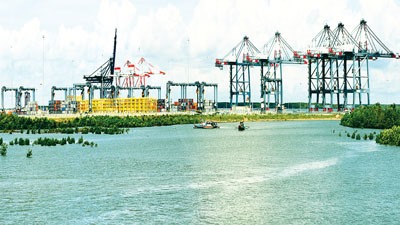
South Korean company Hyosung Corporation has proposed to
build polypropylene (PP) factories and a liquid petroleum gas (LPG) storage
facility in Ba Ria-Vung Tau Province.
The company recently submitted the proposal to the Ba
Ria-Vung Tau industrial zones authority. A source from the Ministry of
Industry and Trade (MoIT) said Hyosung Corp wanted to set up the factories
and storage facility in Cai Mep Industrial Zone, in Tan Thanh District. The
firm would make a capital investment of US$1.2 billion, and the two units
would occupy a proposed area of 608,910sq.m.
The project will be divided into two phases. The first
phase would include the construction of an $133 million underground storage
facility for LPG and the first PP factory with an annual capacity of 300
million tonnes, at a cost of $336 million.
The second phase will include the construction of a second
PP factory with an annual capacity of 300,000 tonnes at a cost of $226
million as well as a PDH factory worth $496 million.
In its proposal, Hyosung Corp has shown its commitment to
environmental conservation and guaranteed the quality of its technology and
machinery.
Hyosung Corp is one of South Korea's top 15 companies in
the field of textiles, manufacturing spandex and nylon, among other things.
In Viet Nam, Hyosung Corp operates factories in Nhon Trach
5 Industrial Zone in Dong Nai Province, producing spandex, nylon and
polyester threads, and steel wires, steel tire cords, bead wires, saw wires,
used in auto manufacturing. Most of their products are exported.
Experts warn of sloppy food chain
Improving the regional link and developing the supply
chain are necessary for the Cuu Long (Mekong) Delta to boost efficiency in
agricultural production and national food security.
Experts of CEL Consulting specialising in supply chains in
South East Asia said the region contributed more than 50 per cent of the
country's food output, but farmers' income remained low and food processing
and export firms continued to struggle, Hai Quan (Customs) newspaper
reported.
According to CEL Consulting, this was due to the
shortcomings of a sloppy supply chain.
Currently, the agricultural sector's supply chain still
has to go through many intermediaries.
More than 90 per cent of farmers rely on intermediaries as
the only source of market information and the only purchasers.
In addition, firms did not have direct interaction with
farmers, so they failed to manage the supply, experts said.
Julien Brun, director of CEL Consulting, was quoted by the
newspaper as saying that the future of the region's agricultural production
would be centralised production, which would require improvements in both the
scale of production and the regional link. Under this model, firms would help
direct farming production following the market demand, develop brand for
agricultural products and apply technologies in production.
Intermediaries should simply play the role of logistics
service providers, according to Julien. The development of a distribution
network was also essential, he said.
The region must increase rice output from 21 million
tonnes per year to 22.1 million tonnes and fishery output by 28 per cent by
2020 to meet national food security.
Footwear firms gear up for FTAs
Vietnamese leather and footwear firms are implementing new
production and business strategies to make the most of the opportunities
provided by free trade agreements (FTAs), especially with Eurasia.
The agreement between the Eurasian Economic Union (EAEU)
and Viet Nam came into effect last month.
A representative of Ladoda JSC said the company had
imported leather, equipment and machinery from India at zero per cent duty
and was seeking foreign partners, including from Mexico. Ladoda had been exporting
handbags and backpacks to the EAEU member countries, and it had now created
20 new designs for other markets in 2017, the representative said.
Phan Thi Thanh Xuan, general secretary of the Viet Nam
Leather, Footwear and Handbag Association (LEFASO), said the localisation
rate of the leather and footwear sector was about 40-45 per cent, while
materials accounted for 68 to 75 per cent of footwear prices.
Once all the FTAs come into force, foreign investors will
focus on material production so as to enjoy tax benefits offered on the basis
of product origin. Meanwhile, Vietnamese firms are expected to raise their
localisation rate and reduce their dependence on imports. Domestic leather
and footwear companies have revamped their production operations to increase
productivity and improve quality, even as they expanding business.
At the same time, investors from countries and territories
such as mainland China, Japan and Taiwan have also built plants in Viet Nam
to make the most of opportunities afforded by the FTAs. Foreign direct
investment (FDI) businesses, which now make up more than 70 per cent of the
sector's export turnover, are said to benefit the most from the deals.
Like garments and textiles, Vietnamese footwear will enjoy
zero per cent tax in the EU and EAEU markets for seven years once the FTA is
in effect. However, Xuan said, once the markets opened up, any business that
met market requirements could benefit from the pacts.
Apart from the opportunities, the deals are also creating
new challenges for the Vietnamese leather and handbag sector. The high labour
rate for leather products and handbags of 70 per cent, has lowered profits
and made the businesses less dynamic. Besides, technical barriers imposed by
the EU and EAEU, together with commitments of social responsibility,
environmental protection and procedures to enjoy tax preferences, will
increase business costs.
Against this backdrop, the LEFASO has suggested that local
enterprises roll out their own strategies and solutions in order to churn out
high-quality products that can gain them a firm foothold in the home market
and compete with their rivals in foreign markets. The association has also
called for more tax and land incentives to encourage more investments in the
sector.
Seafood import restriction removed
Enterprises importing seafood for processing and export
can once again get customs clearance certificates before quarantine
inspections.
A Phap Luat Thanh Pho HCM (HCM City Law) report yesterday
quoted the Viet Nam Association of Seafood Exporters and Producers (VASEP) as
saying permission to obtain the certificates earlier was granted after the
firms complained of undue delays, higher costs and losses.
Many firms had complained to the association that over the
past four years, they'd typically received customs clearance before
inspections, but a new rule issued in August had hurt production and profits.
The Ba Ria Vung Tau Seafood Processing, Import and Export
Joint Stock Company (Baseafood) has been importing salted cod for export
processing for the last two years.
The company kept the imported cod in its own freezers and
waited to get the inspection certificate before processing it.
However, on August 8, 2016, the Region VI Animal Health
Agency issued Official Letter 1094/TYV6-TH guiding quarantine declaration for
imported seafood material for export processing. As per this document, the
customs certificate could be granted only after the imported seafood had
passed quarantine inspections.
The company petitioned the association for help because it
had to spend more money now to store the imported seafood at the port. This
could affect the quality of stored seafood because the company could not
regularly check if the refrigeration was working properly, it argued.
Tran Van Linh, chairman of Thuan Phuoc Seafood and Trade
Joint Stock Company, noted that local enterprises had to import seafood that
was either not available locally or were available in insufficient
quantities. Sometimes, the locally available seafood was priced too high,
making the company's products less competitive in the international market.
For instance, Viet Nam's seafood enterprises were
importing shrimp from India and Ecuador for export processing because of low
import prices of US$1-2 per kilo.
But under the new regulation, the enterprises were losing
out because they had to spend hundreds of millions of dong more on storing
the shrimp at the ports until the inspections were done.
The association said that four years ago, the Ministry of
Agriculture and Rural Development (MARD) had allowed the granting of customs
clearance certificates to enterprises storing imported seafood on their own
while awaiting inspections.
After receiving several complaints from its members, VASEP
requested the ministry's Animal Health Department to reverse its decision.
MARD responded positively to the
request late in October.
It said that the enterprises would be responsible for
ensuring that the imported seafood they stored in their own facilities met
required quality standards. They should also ensure that the stored seafood
was not processed before it passed inspection, the ministry said.
Pham Hai Long, general director of Agrex Sai Gon, welcomed
the decision saying a large number of enterprises doing honest business
should not suffer because of a few that violated existing regulations.
VN bank profits surge on services, not
lending
Some commercial banks have reported high profits in the
first nine months of the year thanks to a restructuring effort which focuses
on services instead of lending as previously done.
According to financial reports released recently, the Commercial
Joint Stock Bank for Foreign Trade of Viet Nam (Vietcombank) posted profit of
nearly VND4.5 trillion (US$200.36 million) in the first nine months, up 13.6
per cent year-on-year.
Of the total, services made up $521 billion, up more than
18 per cent. Securities business also represented VND203 billion.
Vietcombank's profit was nearly equal to that of the
Commercial Joint Stock Bank for Industry and Trade of Viet Nam (Vietinbank)
and the Commercial Joint Stock Bank for Investment and Development of Viet
Nam (BIDV), although its total outstanding loans in the period were less than
VND440 trillion, equal to only two-thirds of Vietinbank and BIDV's.
Last year, services also accounted for 30 per cent of
Vietcombank's profit.
The same trend was seen in Techcombank, which reported
profit of VND279 billion from services in Q3 and VND911 billion in nine
months.
With the contribution from services, Techcombank posted
net profit of more than VND2 trillion in Q3 and more than VND6.2 trillion in
nine months, up 29 per cent and 21 per cent year-on-year, respectively.
The financial report from the Asia Commercial Bank (ACB)
also showed that the bank posted profit of VND236 billion from services in
Q3, helping the bank make total profit of VND415 billion in the period, up
15.5 per cent year-on-year.
ACB general director Do Minh Toan said his bank is
boosting services with a focus on financial services and individual
customers.
According to independent expert Dinh The Hien, while
lending has shown signs of risk due to a rise in non-performing loans,
increasing revenue from boosting services would help banks achieve healthy
and sustained development in the future.
PVcomBank cuts deposit interest rates
PVcomBank last week announced it was lowering deposit
interest rates in an effort to be able to cut lending rates early to support
production and business.
Accordingly, the bank's rate for three to five month
deposits has been cut from 5.5 per cent to 5.3 per cent per year.
The rate for 13 month deposits has also been reduced from
7.5 per cent to 7.2 per cent per year.
The bank's highest rate of 7.6 per cent per year,
applicable for 18, 24 and 36 month deposits, has also been cut to 7.5 per
cent.
Besides aiming to restructure capital sources, PVcomBank
expected that the cut would help it cut lending rates soon to support
production and business according to guidance from the Government and the
State Bank of Viet Nam.
Violations detected in expressway
project
Violations valued at over VND300bn (USD13.63m) have been
uncovered in the construction of the Ha Long-Van Don Expressway, Quang Ninh
Province.
Three packages to relocate the electric lines of 35kV, 6kV
and 0.4kV and the water mains of the Ha Long-Mong Duong section worth
VND300bn have the most serious violations.
According to the inspectors of Quang Ninh Province,
authorities of Cam Pha City had committed wrongdoings when allocating
VND180bn (USD8.18m) package to Thanh Cong Equipment and Engineer JSC, VND78bn
package to Tham Gia JSC and VND16bn package to Nam Thang Construction
Company.
Contractor Thanh Cong Equipment and Engineer JSC is two
months behind schedule in completing the VND87bn package. The company even
changed the measurements and foundations.
Contractors Tham Gia JSC, Nam Thang Construction Company,
Quang Ninh Clean Water JSC have violated regulations through corner-cutting,
using wrong designs and low-quality materials.
Those companies are not specialised in electricity and
clean water systems.
The inspectors asked Cam Pha City authorities to review
the case and punish related individuals. Supervisors and consultants must
take responsibilities.
Bui Dang Trieu, Deputy Office manager of Cam Pha City said
they were considering punishments for Hoang Thi Ngoc Hoa, head of the Finance
and Planning Office, Hoang Cong Bon, head of the Natural Resources Office and
Nguyen Cong Tho, head of the Centre for Land Fund Development.
PM launches establishment for
Vietnamese business culture
PM Nguyen Xuan Phuc on November 7 attended and launched
the campaign to establish Vietnamese business culture, which is meaningful to
both Vietnamese business community and the whole people and society.
The PM stressed the importance of preventing tax evasion,
bribery, corruption and waste as well as responsibility for the living
environment and laborers in business culture.
A good trade mark is not only the asset of businesses but
also the national treasure, that is the reason why a creative Government is
caring about business culture and entrepreneurs' ethics, he said, adding that
the strong and advanced culture business is regarded as an effective
connection for deeper integration into the international and regional
economies.
Business culture is also the mutual assistance and strong
competitiveness, he highlighted.
The campaign on establishment of culture for Vietnamese
businesses focuses on increasing awareness on business culture, upholding production
and business activities, promoting business environment, and enhancing
spiritual culture and physical strength of staff and laborers.
At the ceremony, Decision No. 1846/QĐ-TTg on taking
November 10 as Viet Nam Business Culture Day was announced.
Mekong Delta regional connectivity
scheme still on paper
The regional connectivity scheme for the Mekong Delta,
which was mapped out by the Southwestern Steering Committee and got the green
light from the Government to be conducted on a trial basis, has not been
implemented.
Speaking at a conference on connectivity among Mekong
Delta localities in Ben Tre Province last Saturday, Vo Thanh Hao, chairman of
Ben Tre Province and secretary of the provincial Party Committee, stressed
that regional linkage is pivotal in the area but measures needed to promote
connectivity have yet to be employed.
Hao said the issues have been raised at many conferences
and seminars but local authorities have yet to discuss them thoroughly. He
said apart from agriculture and seafood, the delta has great potential in
sectors like tourism, seafood processing and renewable energy.
However, the region still lags behind other parts of the
country in terms of healthcare, education, infrastructure, manpower and
investment attraction.
Hao emphasized the delta is facing a slew of challenges
given climate change, rising sea levels and salinity intrusion while all
provinces and cities, except for Can Tho, are financially weak and reliant on
State budget appropriations.
He said the regional linkage scheme, considered as a
driver of social-economic development in the region, is still on paper. There
are no mechanisms and policies to stimulate growth in the delta.
Besides, while connectivity among localities is poor, some
of them even embraced unhealthy competition that weakens regional linkage.
The region, with support from central State agencies, has
adopted bilateral and multilateral connectivity models such as the Mekong
Delta Economic Cooperation, but their efficiency remains unclear.
Hao said the abovementioned difficulties and poor
awareness have hindered the development of each locality as well as the whole
region.
Ngo Dong Hai, deputy head of the Party Central Committee’s
Economic Commission, told the conference that apart from the lack of good
policies, weak regional linkage in the delta is attributable to localities
pursuing their own interests.
He explained that as long as each locality still searches
for opportunities and resources for itself to fuel growth, regional linkage
will remain impossible.
HCM City sees ample goods supply for
upcoming Tet
Goods supply for the upcoming Lunar New Year holiday (Tet)
in HCMC is forecast to abound as enterprises joining the city’s market
stabilization program are investing more to meet soaring demand during the
special occasion.
The firms are preparing goods worth more than VND17
trillion (US$755 million) in total for Vietnam’s biggest holiday, up VND860
billion against the same period last year, according to Nguyen Huynh Trang,
deputy director of the municipal Department of Industry and Trade, at a
meeting last Friday.
The total value of products with stabilized prices is over
VND6.8 trillion, up 15-20% against the city’s target and 25-45% versus last
Tet. They include many items with high demand such as meat, poultry, egg,
sugar, cooking oil, rice and processed food.
Local companies have stockpiled VND9.7 trillion worth of
commodities for the buying spree from December 29 to January 27, including
items worth more than VND3.76 trillion for the price stabilization program.
According to the department, companies that have
registered for participation in the program account for 30-40% of total goods
supply for Tet, wholesale markets for 30-40% and other companies for 10-20%.
In particular, the HCMC Union of Trading Co-operatives
(Saigon Co.op) has stocked up on 105,000 tons of goods worth over VND3.08
trillion, including VND938 billion for the price stabilization program,
Saigon Trading Group (Satra) with nearly VND1.4 trillion and VND527 billion,
and three wholesale markets, Thu Duc, Hoc Mon and Binh Dien, with around
15,000-16,000 tons per day.
Trang said the participating companies are committed to
make prices stable during Tet. They also offer discounts on essential items
such as pork, poultry and egg.
Apart from price stabilization, businesses will launch over
1,500 Tet promotion programs. Large distribution systems will offer discounts
of 15-49% on thousands of items. In addition, many mobile stores will offer
goods at stable prices during Tet for students and low-income people like
factory workers.
Minister urges concerted efforts to rev
up restructuring
The Minister of Planning and Investment on November 3
rallied support from all ministries and localities for concerted efforts to
step up economic restructuring, saying the structural reform needs to earn the
top priority.
Addressing the National Assembly, Minister Nguyen Chi Dung
expressed concern that the process of economic restructuring could be
hindered by ministries and localities for fear of their interests being
affected.
“Drastic measures (of the structural reform) may have
certain negative impact on the interests of ministries and localities.
Therefore, there remains the danger of the economic restructuring process
being delayed or implemented half-heartedly,” Minister Dung said.
The minister stressed that leaders of localities and
ministries should have a vision beyond the interests of their own
organizations and benefits of their office terms to move towards close
coordination among sectors, regions and localities for higher mutual
efficiency.
In addition, Minister Dung said there needs to be a
suitable legal corridor to help realize focal goals of restructuring. That
requires certain laws and regulations to be amended and supplemented, which
is a hard job as it demands consensus and swift action.
The minister noted that economic restructuring is a
painstaking process.
As mapped out in the drastic restructuring plan, Minister
Dung said, budgetary principles must be tightly adhered to. Key goals are to
enhance public investment efficiency, reduce regular public expenditures,
curb budget overspending to less than 4% of gross domestic product, and speed
up divestment of State stakes in State-owned enterprises (SOE).
Regarding financial resources for economic restructuring
in 2016-2020, the minister gave further explanations on the amount of
VND10,500 trillion that was mentioned in the Government’s report at the
National Assembly last week.
Accordingly, to achieve an average GDP growth rate of
6-5-7% and an incremental capital output ratio (ICOR) of 5 to 5.5 in the
five-year period, then the total investment in the economy should amount to
32%-34% of GDP, equivalent to VND9,000-10,000 trillion.
In this process, the ratio of State capital will be
reduced while more funds from the society, especially the local private
sector, will be mobilized. Specifically, the share of State capital will be
reduced from 39.1% in 2011-2015 to between 31% and 34% in 2016-2020, while
the corresponding share of local private funds will rise from 38.3% to
45-48%, Minister Dung said.
He also mentioned prioritized targets in the upcoming
economic restructuring to include quick settlement of bad debt and weak
banks; equitization of SOEs and divestment of State stakes; strictly abiding
by the Law on State Budget; and improving the business environment and
supporting the private sector development among others.
Worries over housing tax
Suggestions let fly by the Ministry of Finance to collect
the housing tax have stirred up objections from many experts who challenge
the foundation for such a plan. They argue that the reasons behind the
ministry’s intention are not convincible.
As covered in local media, the Taxation Policy Department
under the ministry has been assigned to flesh out the plan to collect the
housing tax, especially those people with two or more houses. Those people
with only one house will likely be exempted from this tax, but the tax rate
will increase progressively from the second home. Deputy Minister of Finance
Huynh Quang Hai says in Tuoi Tre that “the housing tax will surely be
collected, not only to increase revenues for the State budget but also
because the housing tax has been collected in many countries for long.”
Such an approach immediately draws fire.
In many countries worldwide, as reasoned by experts, the
housing tax is often meant by the State to regulate the market so as to curb
excessive speculation, thus ensuring healthy development of the property
sector, beside the goal of generating more income for the State budget.
In Vietnam, they say, the Ministry of Finance needs to
spell out its key goal - whether it is to earn more revenue or to intervene
in the market - and needs to take a prudent approach in both cases.
If the primary goal is to create a new source of income
for the State budget, a rethink is needed, since the burden of taxes and fees
in the country is deemed to be already rather heavy for businesses and the
people. Creating a new tax will make life harder for many people.
Meanwhile, if the goal is to introduce State intervention
to ensure justice among all market players, the goal can hardly be realized
if the tax is simply based on the number of houses one owns, and speculators
will still have ways to ensure their profit margin by factoring the tax sum
into their prices. That is to say the rich can still defend their wealth,
while poorer people will suffer if housing prices climb due to the new tax.
In addition, a certain homeowner can have two or three
houses, but the total value of their properties is far lower than one with
only a big house in a prime location. In major cities, a big house in a good
commercial quarter may cost hundreds of billions of dong, while a house on
the outskirts is priced at hundreds of millions or less, and if the tax is
imposed on multiple-home owners, then justice cannot be ensured. That is not
to mention the vast difference between a home in a major city and another in
the countryside.
As such, the housing tax – if it is to come into life –
must be conceived in another way, and should be based on the value of
properties as the core rather than merely the number of properties, besides a
set of criteria scientifically mapped out to ensure that State intervention
in the market will work to make life easier for the general public. It should
stabilize the market rather than stirring up public worries.
Plastic material firms face tough
competition from foreign rivals
Experts attending a conference in HCMC last week said
local producers of plastic materials for the construction industry are facing
tough competition from foreign rivals in terms of both imports – largely from
China – and the increasing presence of foreign companies on the market.
According to the conference organizer, VietinBank
Securities Company (VietinBankSC), domestic plastic materials for
construction hold a market share of 60% and imports for the rest, of which
90% come from China and the remainder from Malaysia and Europe.
Currently, many domestic producers use Chinese technology
and equipment, Pham Van Bac, deputy head of the Building Material Department
under the Ministry of Construction, told the conference on competition on the
domestic plastic market.
As predicted by industry experts, the demand for plastic
materials for use in the construction industry, such as plastic doors,
windows and others, will increase rapidly in the coming years.
The Ministry of Construction said the housing market is
forecast to grow 10-15% per year in the coming time, so 1-1.2 million square
meters of housing would be needed a year.
This demand will boost the demand for construction
plastics, the ministry explained. From 80% to 90% of housing projects in
Vietnam use plastic doors and the rest utilize wooden products.
The competition in the plastic material industry is
strong.
Construction plastic materials account for only 18.2% of
the entire plastic industry’s sales but their annual growth rate is 15-20%,
reflecting great potential.
The country is home to 180 producers of plastic products
for construction projects, including plastic pipes, doors, windows, ceiling
panels and even furniture.
Plastic pipe producers alone register over VND12 trillion
(US$533.2 million) in revenue a year with two major enterprises – Tien Phong
Plastic Joint Stock Company and Binh Minh Plastics Joint Stock Company.
For construction plastic materials, Dong A Plastic
currently hold a dominant market share, but foreign players are increasing
their presence on the market.
Foreign enterprises usually step into the domestic plastic
industry through merger & acquisition (M&A) deals. For example,
Nawaplastic Industries, a subsidiary of Thai giant SCG, is holding a stake of
more than 20% in Binh Minh Plastics and 23.8% in Tien Phong Plastic.
South Korean and Chinese firms have also prepared
themselves to enter the Vietnamese market, piling pressure on local plastic
companies.
Five loss-making megaprojects under
investigation
Minister of Industry of Trade Tran Tuan Anh, telling
lawmakers at the National Assembly (NA) session in Hanoi last week, said his
ministry is inspecting five loss-making megaprojects.
The five projects – Phuong Nam paper mill, Ninh Binh
fertilizer plant, Thai Nguyen iron and steel mill, Dinh Vu yarn factory and
an ethanol and bio-fuel undertaking – have been executed by corporations
where the State holds a controlling stake. They have been dogged by long
delays, which have resulted in colossal cost overruns.
The Government has acted to pull them out of difficulties
but to no avail.
Minister Anh warned, “Not just the five projects but a
number of others are also running the risk of making huge losses.”
All those individuals and units involved in these
poor-performing projects should be held accountable, he noted.
Anh said lessons should be learned from reckless
injections of trillions of dong into the above projects. The management of
investment activity of the Government and State-owned enterprises should be
strengthened.
Four investors interested in highway
upgrade project
Four consortiums have expressed interest in a major
project to upgrade and widen National Highway 22, which connects HCMC and Tay
Ninh Province’s Moc Bai border gate.
A source from the HCMC People’s Committee office said four
consortiums had submitted their formal requests to get involved in the
project by early this month.
These four consortiums have proposed widening the HCMC
section of the highway to 60 meters and upgrading the surface and drainage
system of the highway section in Tay Ninh. However, they have different
proposals regarding some intersections and bridges along the road, resulting
in different funding needs which range from VND6.5 trillion (US$292 million)
to VND9.5 trillion (US$427 million).
The HCMC government wants to widen the highway section in
the city to 60 meters, upgrade the existing road surface and drainage system
of the Tay Ninh section, build an intersection, widen An Ha Bridge by 30
meters, and keep the other bridges along the highway unchanged.
The city government last week sent a report to the
Ministry of Transport and Tay Ninh Province asking for their feedback before
a feasibility study is done.
The city has secured the Prime Minister’s approval for a
plan to call for investors to upgrade National Highway 22 under the build-operate-transfer
(BOT) format. Investors can install a toll station to recover investment
capital.
Some narrow stretches of the 58.2-kilometer National
Highway 22 have become overloaded due to rising traffic.
In a related development, the Ministry of Transport is
seeking investors for an expressway linking HCMC and Moc Bai and running in
parallel with National Highway 22.
Along with National Highway 22, Ho Chi Minh Road, and belt
roads No.3 and No.4 in HCMC, this expressway will form a complete road
network connecting southern Vietnam and neighboring countries including
Thailand and Cambodia.
New rural development model causes
widespread indebtedness
The achievements of the national target program for rural
development – often dubbed New Rural Development – in the past five years are
undeniable but resources spent on this program are considerable.
Many deputies of the National Assembly (NA) deem it
necessary to review the indebtedness of rural communes and districts, and the
impact of the spending of this program on the State budget.
The NA last Friday spent the whole day deliberating the
implementation of the national target program on rural development associated
with agricultural restructuring in 2010-2015.
So far, 2,061 communes (23%) have met the New Rural Area
criteria, and 27 district-level units have been granted certification, says
the report of the NA Standing Committee delivered by Chairman Vu Hong Thanh
of the NA Economic Committee.
Certain criteria are amply fulfilled, such as planning
(98.74%), social security (93.7%), electricity (82.38%), education (77.86%),
irrigation (61.37 %) and income (56.48%). The poverty rate in rural areas
thus declined from 17.4% in 2011 to 8.2% in 2015, or an average of 1.84% per
year.
In the same period, the per capita income also rose from
VND16 million to VND28.4 million in the communes meeting the New Rural Area
criteria, while their poverty rate fell sharply from 11.6% to 3.6 %.
However, to finance the program, more than VND850 trillion
was mobilized nationwide. The NA has used VND15 trillion from government bond
sales to finance this program in the period from 2014 to 2016.
To carry out the program, 53 of the country’s 63 cities
and provinces (over 84%) have racked up total debts of more than VND15.2
trillion. Some grassroots governments have even become insolvent, receiving
negative feedback from the public.
Debt is mainly owed by capital construction projects in
the north (the Red River Delta and the north central region), the
front-runner in the movement of rural development. The debt of these two
regions combined accounts for 75.3% of the country’s total.
Meanwhile, the total debt owed by the communes
acknowledged as new rural areas makes up 46.9%. It represents 1.8% of the
total resources mobilized for the program and 5.7% of the total funding.
Deputy Nguyen Ngoc Phuong of Quang Binh Province said:
“Many communes are achievement-driven, mobilizing excessively from the
public, with even the poor, the elderly and those families under the
preferential treatment policy getting involved…”
Delegate Nguyen Tuan Anh from Binh Phuoc stressed the need
to assess the results achieved with the money spent. The serious long-term
consequences which many rural communes and households, especially the
poverty-stricken ones, will suffer could not be ignored.
It is a must to investigate and publish full reports on
the debt owed by rural communes, and the number of farmers falling victim to
heavy mobilization, said Anh. One may wonder if it is appropriate for rural
development in many areas to put too much emphasis on achievements or to
simply go with the flow as it is right now.
U&I and FPT to invest in Danang
Hi-tech Park
Two domestic enterprises inked investment commitment
agreements within the framework of a seminar organized in HCMC last Friday to
promote investment into Danang Hi-tech Park.
In particular, U&I Investment Corporation is committed
to investing in the logistics sector while FPT University is to conduct
research and training projects in the information technology field at this
high-tech park.
The 1,500 hectare Danang Hi-tech Park is considered an
investment hotspot in the central and Central Highlands regions, and a
convergent point for industrial and economic zones in the central region,
according to the Danang Hi-tech Park Management Authority.
Completed with more 300 hectares of site clearance, the
park offers technical infrastructure ready for investment projects.
High-tech investment projects in the priority list are
exempt from infrastructure fees for the entire rental period. In addition to
investment incentives, tenants enjoy a preferential corporate income tax of
10% for 15 years, and a corporate income tax exemption in the first four
years plus a reduction of 50% in the following nine years.
There are currently four investment projects licensed into
the park, including two wholly Japanese-invested projects and two domestic-invested
ones with combined registered capital of US$140 million.
The park, 15 kilometers from the city center, is one of
the three national hi-tech zones of Vietnam established under a decision of
the Government. The park management has listed many priority areas to call
for investment, such as precision engineering, information technology,
software, new energy and new materials.
PVcomBank cuts deposit interest rates
PVcomBank last week announced it was lowering deposit
interest rates in an effort to be able to cut lending rates early to support
production and business.
Accordingly, the bank's rate for three to five month
deposits has been cut from 5.5 per cent to 5.3 per cent per year.
The rate for 13 month deposits has also been reduced from
7.5 per cent to 7.2 per cent per year.
The bank's highest rate of 7.6 per cent per year,
applicable for 18, 24 and 36 month deposits, has also been cut to 7.5 per
cent.
Besides aiming to restructure capital sources, PVcomBank
expected that the cut would help it cut lending rates soon to support
production and business according to guidance from the Government and the
State Bank of Viet Nam.
Work starts on $45m pig farm in Nghe An
Work on a high-tech pig-breeding farm worth VND1 trillion
(US$45 million) began in central Nghe An province's Quy Hop District on
Saturday.
Financed by Masan Group, the Masan Nutri-Farm will occupy
223hecatres, making it the largest pig farm in the province. Once
operational, it is expected to create 350 local jobs and contribute about
VND1 trillion to the local GDP.
The farm is slated to start operations in the first
quarter of 2017 and start supplying pork one year later, Massan Group
chairman Nguyen Dang Quang said. It is designed to raise 240,000 pigs a year,
in line with the Vietnamese Good Agriculture Practices (VietGap), he said.
In his speech at the ground-breaking ceremony, Nguyen Xuan
Duong, chairman of the provincial People's Committee, expressed hope that the
farm would contribute to accelerating the province's socio-economic development.
He also promised that local authorities would create favourable conditions
for the Massan Group to implement its projects.
On the occasion, Masan Group presented VND150 million to
Ha Son preschool and gifts to 10 farming households in Quy Hop Commune.
Seafood exports benefit most from
Vietnam-EAEU FTA
Nearly 90 percent of tariff lines have been cut and
reduced, with 59 percent abolished immediately as the Free Trade Agreement
(FTA) between Vietnam and the Eurasian Economic Union (EAEU) has taken effect
since October 2016.
It is an advantage for Vietnam when exporting goods to
EAEU countries compared to other countries in the world.
The aquatic sector will get the most from the agreement
since the EAEU will reduce its import tax, from 10 percent to zero, for
aquatic products from Vietnam, including processed ones.
Some of processed and canned products, such as tunas and
shrimps, will enjoy preferential tax, but they are groups that Vietnam lacks
of materials. Another five percent of tax lines will be applied on other
seafood products that are not strength of Vietnam.
Agro-forestry products will get the least benefit. For
rice, the EAEU has a set an initial quota of importing 10,000 tonnes of rice
per year from Vietnam with zero tax. The above-quota amount will be levied
the most-favoured nations (MFN) tax. In addition, Vietnam’s annual rice
export volume is dependent on demand of EAEU countries.
The agreement will not reduce taxes for green tea packages
weighed under 3 kg. Zero taxes are applied only for raw Vietnamese coffees
and peppers while there will be no tax exemption or reduction for the
processed products.
Leather, footwear firms move to seize
opportunities from FTAs
Many Vietnamese leather and footwear firms have been
implementing new production and business strategies to seize opportunities
offered by free trade agreements (FTAs), especially a deal between the
country and the Eurasia Economic Union (EAEU) which took effect last month.
A representative of Ladoda JSC said the company has
imported leather, equipment and machinery from India with a zero percent
duty, and is seeking foreign partners, including those from Mexico.
Ladoda has exported its handbags and backpacks to EAEU
member countries, the representative said, adding that the company has also
designed about 20 new models for other markets in 2017.
Phan Thi Thanh Xuan, General Secretary of the Vietnam
Leather, Footwear and Handbag Association (LEFASO), said the locally-made
rate of the leather and footwear sector is about 40-45 percent while
materials account for 68-75 percent of footwear prices.
Once the Vietnam-EAEU Free Trade Agreement and other free
trade pacts come into force, foreign investors will focus on material
production in order to enjoy tax preferences offered on the basis of product
origins.
Meanwhile, Vietnamese firms are expected to raise their
locally-made rate and reduce their dependence on imports.
Domestic leather and footwear companies have revamped
their production, gearing towards higher productivity and quality, while
expanding markets. At the same time, investors from such countries and
territories like China, Japan and Taiwan (China) have also built plants in
Vietnam in a bid to make the best use of opportunities afforded by the FTAs.
Foreign direct investment (FDI) businesses, which now make
up more than 70 percent of the sector’s export turnover, are said to benefit
the most from the deals.
Like garments-textiles, Vietnamese footwear will enjoy
zero percent tax in the EU or EAEU markets within seven years since the
Vietnam-EAEU FTA took effect.
However, Xuan said, the trend will no longer exist
following the market’s opening, any business which satisfies market
requirements can benefit from the pacts.
Apart from opportunities, the deals will also generate a
range of challenges for the Vietnamese leather and handbag sector.
The high manual rate of leather products and handbags at
70 percent has lowered profits and weakened the dynamism of the enterprises.
Besides, technical barriers imposed by the EU or EAEU, together with
requirements regarding social responsibility, environmental protection and
procedures to enjoy tax preferences, have forced the businesses to cover more
costs.
Against the backdrop, LEFASO suggested local enterprises
roll out their own strategies and solutions in order to churn out
high-quality products that can gain a firm foothold in the home market and
compete with their rivals in foreign markets.
The association also called for more tax and land
incentives to encourage more investors in the sector.
VEF/VNA/VNS/VOV/SGT/SGGP/Dantri/VET/VIR
|
Thứ Ba, 8 tháng 11, 2016

Đăng ký:
Đăng Nhận xét (Atom)
Không có nhận xét nào:
Đăng nhận xét